Last week, two very different conferences told a similar story.
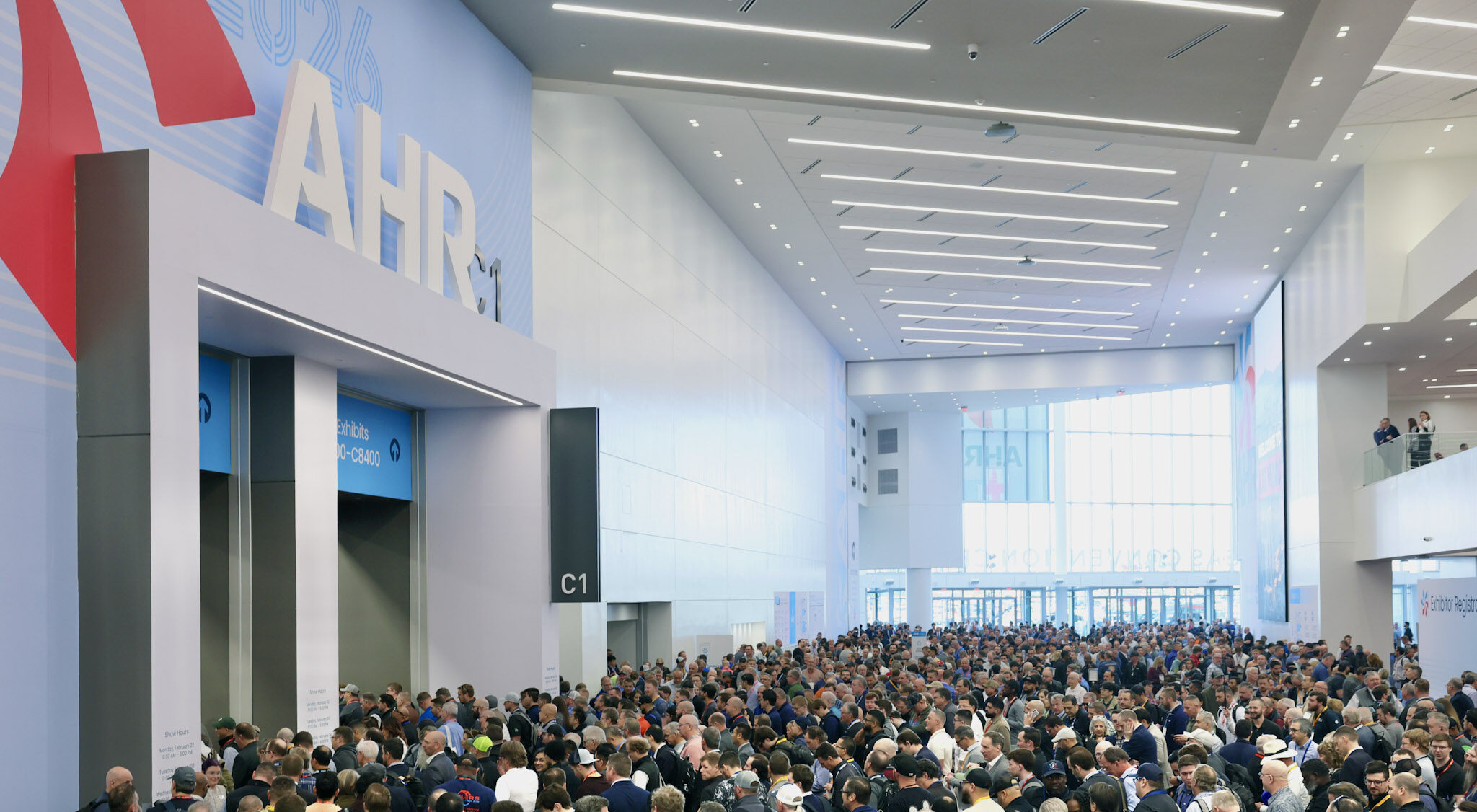
At DistribuTECH (DTECH), the conversation centered on grid-scale realities: device portfolios, operational complexity, and how demand flexibility actually works in practice. At AHR, the HVAC industry showed its latest innovations, highlighting smarter, more efficient technologies that have the potential to change the role that heating and cooling play in demand flexibility.
Different audiences. Same takeaway: distributed energy is here, and now the industry is racing to make it operational at scale.
DTECH: Flexibility is no longer optional
One of the most noticeable shifts at DTECH was the increase in battery storage manufacturers in attendance. As federal tax credits change, manufacturers are looking for new ways to make equipment adoption financially viable, and flexibility is emerging as a core lever.
State and local incentives still exist, but they’re harder to message than simple federal rebates. As a result, manufacturers, aggregators, and utilities are all converging on the same question: how do we unlock value from devices over time, not just at installation?
That urgency is driving rapid ecosystem movement. New partnerships, expanding device strategies, and plenty of speculation about consolidation. The signal is clear though: load flexibility is becoming central to grid strategy.
The themes everyone was talking about
Four ideas surfaced repeatedly across both events:
-
- Demand flexibility is gaining trust. VPPs are becoming more reliable, with clearer best practices.
- Flexible interconnection is moving from theory to reality. Utilities are increasingly open to dynamic operating envelopes if real-time coordination is possible.
- AI is entering utility workflows, starting with planning. From power flow modeling to customer engagement, AI is saving time where operational and safety risks are lower.
- Flexibility is no longer a question of technology. The industry is now well-versed in the technical mechanics of delivering flexibility. The main barriers to deploying flexibility at scale have shifted: policy and process are now the primary factors standing in the way.
AHR: Massive opportunity, early understanding
AHR reinforced how much energy potential sits in HVAC, but also how much education remains.
Many stakeholders still think in terms of traditional efficiency rebates: install equipment, get paid once. Flexibility is left to the realm of smart thermostats. But modern HVAC systems are far more capable than simple thermostat-driven “on/off” control systems. Unlocking that capability requires ongoing coordination, not one-time incentives, and device-specific communication rather than thermostat-mediated control.
That’s why the HVAC sector is at an inflection point. Participating in demand flexibility programs will require new program designs, different integration paths, and clearer education. This isn’t a 2026 volume story. It’s groundwork for 2027 and beyond.
The takeaway is clear: distributed energy is no longer limited by innovation or intent. It’s limited by how easily systems, devices, and programs can work together.
The next phase of distributed energy won’t be won by devices alone. It will be won by the teams that can connect them, quickly, securely, and at scale.
If you’re exploring demand flexibility, flexible interconnection, or multi-device programs in 2026 and beyond, we’d love to talk. Connect with Derapi to learn how we help innovators move faster, integrate once, and say yes to what’s next.